
AC Not Cooling But Fan Is Running: 7 Causes and Fixes
- Update Date: June 9, 2026
Disclosure: This post contains affiliate links. If you purchase through them, we may earn a small commission at no extra cost to you.

Share the Glint Editorial Team
We're a small team of home appliance researchers and writers focused on HVAC and appliance troubleshooting across North America. Our guides are created by analyzing manufacturer manuals, HVAC service documentation, and real-world repair patterns reported by technicians and homeowners. We use multiple independent sources to validate key technical claims, including manufacturer documentation and industry safety guidelines (such as EPA and DOE references where applicable). Our goal is to turn complex technical information into clear, practical guidance for everyday homeowners.
Quick Answer: When your AC fan runs, but no cold air comes out. There are the most common culprits, including a clogged air filter and dirty condenser coils. Or a failed capacitor, low refrigerant, or a compressor that's quit on you. In many cases, a $5 filter swap or a quick coil rinse fixes it in under 20 minutes. This guide walks through all 7 "call a pro" scenarios, giving you a step-by-step guide to help you fix.
Is This Your Exact Problem?
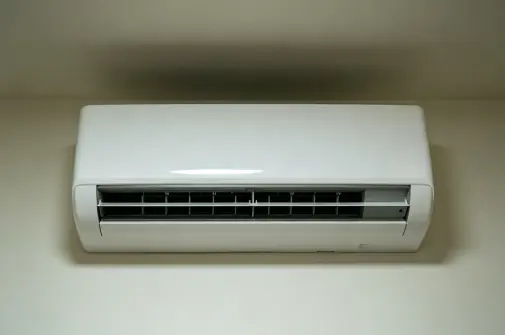
Before diving in, let's make sure we're solving the right thing. Your AC not cooling but fan is running: you can hear it and feel airflow. But the air coming out is warm, lukewarm, or just room temperature. Not even slightly chilly. You will have questions like: Why is my AC not cooling even though the fan is running? Why split AC not cooling but fan is running? My ac not cooling but fan is running really bothered me. Here's the checklist:
- The indoor blower fan is running and pushing air through the vents — but the air isn't cold
- The outdoor condenser unit is humming, or the fan blade is spinning, but the system never actually cools down
- The thermostat is set to "Cool" and the temperature is set lower than the room temperature
- The AC runs continuously for 20+ minutes without dropping the room temperature by even 1–2°F
- You may hear a humming, clicking, or buzzing noise near the outdoor unit — or dead silence from it
- The evaporator coil (the indoor coil) looks iced-over or frosty
If two or more of those match your situation, keep reading. You're in the right place.
What usually causes AC not cooling — ranked by likelihood
Here's the honest breakdown. Most "AC not cooling but fan is running" complaints fall into one of these seven buckets. The first three are responsible for the majority of cases. And you can check the quetion in about 15 minutes.
Estimated share: ~30–35% of cases
Estimated share: ~20% of cases
Estimated share: ~15–20% of cases
Estimated share: ~10–15% of cases
Estimated share: ~8–10% of cases
Estimated share: ~5–8% of cases
Estimated share: ~5% of cases, but expensive
How to diagnose and fix AC not cooling but fan is running: step by step
- 1Check the thermostat settings firstMake sure it's set to "Cool" (not "Fan Only"), the temperature is at least 3–5°F below the current room temperature. And replace the batteries if you're not sure when you last did it. This is the #1 overlooked fix. Takes 30 seconds.
- 2Check both circuit breakersGo to your electrical panel. Find the breaker(s) labeled "AC," "Condenser," or "Air Handler." If either one is tripped (usually sitting between ON and OFF), flip it fully OFF, then back to ON. If it trips again immediately or within minutes, stop and call a pro. Don't keep resetting a repeatedly tripping breaker.
- 3Inspect and replace the air filterFind your air filter (usually in the return air vent or the air handler cabinet). Hold it up to a light. If you can't see light through it, it's overdue for a change. After we read and learn from the Repair Clinic paper. A clogged filter is the most likely cause of an ac fan is running but not cooling because it chokes airflow and can cause the evaporator coil to frost over. Replace it — filters cost $5–$25 at any hardware store. Filters should be changed every 1–3 months.
- 4Clean the outdoor condenser coilsPower off the outdoor unit at the disconnect box (usually a small box on the wall near the unit). Remove any leaves, grass clippings, or debris from around the unit — keep a 2-foot clearance. Then gently rinse the condenser fins with a garden hose from the inside out. Don't use a pressure washer — it bends the fins. We search and confirm after the RepairClinic paper. The dirty condenser coils cause the compressor to run nonstop. Without achieving the set temperature. Let it dry for 15–20 minutes before restarting.
Tools: Garden hose, work gloves. Time: 20–30 min. Difficulty: Easy. - 5Listen for capacitor failure symptomsWith the system running, stand near the outdoor unit. A healthy system should hum quietly. A failing capacitor often produces a loud hum or clicking noise. Or you find the outdoor fan spins very slowly (or not at all) while the unit tries to start. You can visually inspect the capacitor if you're comfortable. There it's a cylindrical component inside the outdoor cabinet. A bulging or leaking capacitor is a dead giveaway it's failed.⚡Warning: Capacitors store high voltage. Do not handle them yourself unless you know how to safely discharge them. This is a job most homeowners should leave to an HVAC tech. AND it's a quick, inexpensive repair (parts cost $8–$45; labor brings total to ~$170–$400).
- 6Check for a frozen evaporator coilIf your AC runs for a long time but produces no cooling, or if you see ice on the copper line going into your air handler. Mean the evaporator coil may be frozen. Turn the system OFF and let it thaw for 2–3 hours with just the fan on. Then check the filter (Step 3) — a blocked filter is usually the reason. If the coil re-freezes after thawing, low refrigerant is likely the cause and you'll need a pro to diagnose the leak.
- 7Suspect refrigerant or compressor issues — call a proIf you've done all of the above and the system still blows warm air, the problem is almost certainly a refrigerant leak or a failed compressor. Both require a licensed HVAC technician. Refrigerant handling requires an EPA 608 certification — it's not a DIY job. The technician will do a leak detection test, repair the leak, and then recharge the system. If the compressor has failed, the repair cost may approach or exceed the value of the unit, especially if it's older than 10 years.
Stop here. You've done what you can.
DIY vs. pro repair vs. replacement — the cost breakdown
Here's a straight comparison so you can make an informed call. Costs below are based on 2025–2026 U.S. market data from HomeGuide, Angi, and This Old House.
| Fix | DIY Cost (parts) | Pro Cost (parts + labor) | DIY Difficulty | Verdict |
|---|---|---|---|---|
| Air filter replacement | $5–$25 | $50–$100 (service visit) | 🟢 Easy | DIY — no reason to pay a pro for this |
| Thermostat setting / batteries | $0–$5 | $100–$150 (service call) | 🟢 Easy | DIY — takes 30 seconds |
| Condenser coil cleaning | $0–$20 (coil cleaner spray) | $100–$200 | 🟡 Moderate | DIY if comfortable, otherwise affordable pro job |
| Circuit breaker reset | $0 | $75–$150 (service call) | 🟢 Easy | DIY reset OK once; if it keeps tripping — call a pro |
| Capacitor replacement | $8–$45 (part only) | $170–$400 (labor + part) | 🔴 High voltage risk | Strongly recommend pro — capacitors hold lethal charge |
| Refrigerant recharge + leak repair | Not legal to DIY | $220–$600 (R-410A); $300–$1,500 (older R-22) | 🔴 Requires EPA 608 | Pro only — no exceptions |
| Compressor replacement | Not recommended as DIY | $1,200–$2,800+ (parts + labor) | 🔴 Licensed tech required | Consider replacement if unit is 10+ years old |
| ⚠ When to stop DIYing | Stop and call a pro ①If the breaker keeps tripping after reset. ②You see ice on the refrigerant lines after thawing and filter replacement.③You smell burning from the outdoor unit. ④The outdoor fan doesn't spin at all. ⑤Or the compressor makes loud clunking or grinding noises. These indicate electrical or sealed-system failures that are dangerous to handle untrained. | |||
📊 Repair vs. Replace — The 50% Rule
A new central AC system typically costs $3,500–$7,500 installed (2026 U.S. average). Use this table:
| Repair: Filter / coil cleaning / breaker reset Cost: $0–$200 | ✅ Always repair |
| Repair: Capacitor replacement Cost: $170–$400 | Unit age <10 yrs | ✅ Repair — cheap fix |
| Repair: Refrigerant leak + recharge Cost: $300–$1,500 | Unit age <8 yrs | ⚠️ Depends on unit age |
| Repair: Compressor replacement Cost: $1,200–$2,800 | Unit age 10+ yrs | ❌ Replace the unit |
| Multiple failures in one season Any cost | Unit 12+ yrs, uses R-22 | ❌ Replace the unit |
After we read the Energy Star paper. We find it's recommends having HVAC equipment more than 10 years old and not keeping your house comfortable. It's time to find an evaluated a professional or replace it! See: energystar.gov/saveathome/heating-cooling
Sources & References
- 🔗 RepairClinic — Air Conditioner Not Cooling (all brands)
- 🔗 RepairClinic — LG Air Conditioner Not Cooling
- 🔗 RepairClinic — Frigidaire Air Conditioner Not Cooling
- 🔗 Energy Star — Duct Sealing (duct leakage stats)
- 🔗 Energy Star — Duct Sealing Fact Sheet (PDF)
- 🔗 Energy Star — Heat & Cool Efficiently
- 🔗 HomeGuide — AC Repair Cost (2026)
- 🔗 HomeGuide — AC Capacitor Replacement Cost
- 🔗 This Old House — AC Capacitor Replacement Cost
- 🔗 Angi — AC Capacitor Replacement Cost (2026)
Table of Contents
Toggle