
Refrigerator Freezing Food? 6 Causes & Easy Fixes
- Update Date: August 6, 2026
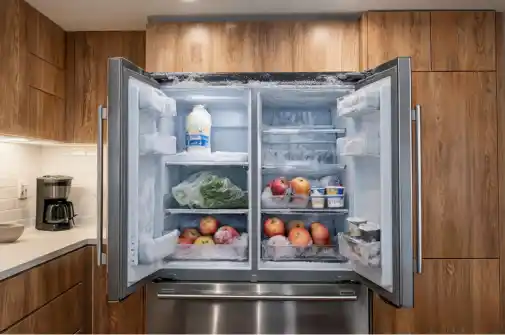
Disclosure: This post contains affiliate links. If you purchase through them, we may earn a small commission at no extra cost to you.

Share the Glint Editorial Team
We're a small team of home appliance researchers and writers focused on HVAC and appliance troubleshooting across North America. Our guides are created by analyzing manufacturer manuals, HVAC service documentation, and real-world repair patterns reported by technicians and homeowners. We use multiple independent sources to validate key technical claims, including manufacturer documentation and industry safety guidelines (such as EPA and DOE references where applicable). Our goal is to turn complex technical information into clear, practical guidance for everyday homeowners.
Quick Answer: A refrigerator freezing food is usually caused by a temperature set too cold, food sitting too close to an air vent, or a faulty temperature control thermostat that's running the compressor longer than it should. In most cases, adjusting the setting and giving it 24 hours clears it up with zero tools needed — a classic fridge freezing food fix. This guide covers all the likely causes in order, from the quick fixes to the parts worth testing.
Is this your exact problem?
So your refrigerator is freezing food and you're not sure why. If your fridge is freezing food only in certain spots, that's actually a big clue. This happens more than people think, and it's usually not as dramatic as a broken compressor. See which of these match what you're seeing.
- Lettuce, milk, eggs, or produce turning icy or crunchy on the top shelf or in the back
- Items closest to the back wall or a specific vent freezing while the rest of the fridge is fine
- The whole refrigerator running colder than the dial setting suggests it should
- Freezing started right after you adjusted the temperature dial or added a lot of groceries at once — a classic sign my refrigerator is freezing food because of a setting, not a broken part
- he compressor seems to run almost constantly, even with the door closed
If a couple of these sound right, let's figure out which cause fits your fridge freezing food problem.
What usually causes this — ranked by likelihood
Why does my refrigerator freeze food? Nine times out of ten it's one of these, starting with the simplest. Ask "why is my refrigerator freezing food" in a search bar and this is basically the answer you'd get back.
Refrigerator Freezing Food Troubleshooting Chart
| Problem | Likely Cause | First Fix |
|---|---|---|
| Food freezes near back wall | Air vent airflow | Move food |
| Milk freezes | Temperature too low | Set 37°F |
| Vegetables freeze | Damper issue | Check airflow |
| Whole fridge freezes | Thermostat/Thermistor | Test sensor |
| Only one area freezes | Cold air leak | Check vent |
How to diagnose and fix frost buildup in your freezer — step by step
- 1Check the temperature dial and give it timeSet the refrigerator to 37°F and the freezer to 0°F. This one step answers why does my refrigerator freeze food more often than any other cause. If you just changed it, wait a full 24 hours before judging the results — the fridge needs that long to stabilize.
- 2Find and clear the air ventsLocate the vents where cold air enters the fridge compartment, usually along the back wall. Move any containers, bags, or bins that are sitting right against a vent. This alone fixes a lot of cases.
- 3Test the temperature control thermostatTurn the dial from cold to warm and listen for a click. No click means you should test it with a multimeter for continuity. No continuity at any setting means it needs replacing.
- 4Test the thermistorWith the unit unplugged, check the thermistor's resistance at a couple of different temperatures. If the reading doesn't change as expected, swap it out.
- 5Check the damper and evaporator fanLook at the damper near the vents and confirm it opens and closes rather than staying stuck. Spin the evaporator fan blades by hand — they should turn freely and quietly, not grind or stick.
- 6Rule out the control board, then call a proIf the thermostat, thermistor, damper, and fan all test fine but your fridge is freezing food no matter what, a control board sending continuous voltage is the likely culprit. Board diagnosis is best left to a technician.
DIY vs. pro repair vs. replacement — the cost breakdown
Here's the real cost range for each fix, so you know what you're getting into before you order a part. If my refrigerator is freezing food only occasionally, the free fixes at the top of this table are usually all you need.
| Fix | DIY Cost (parts) | Pro Cost (parts + labor) | DIY Difficulty | Verdict |
|---|---|---|---|---|
| Adjust temperature setting | $0 | N/A | ✅ Easy | DIY |
| Rearrange food away from vents | $0 | N/A | ✅ Easy | DIY |
| Replace temperature control thermostat | $25–60 | $150–220 | ⚠️ Moderate | DIY |
| Replace thermistor | $15–40 | $140–200 | ⚠️ Moderate | DIY |
| Replace air damper assembly | $30–70 | $160–230 | ⚠️ Moderate | DIY |
| Replace evaporator fan motor | $40–90 | $180–260 | 🔴 Requires panel removal | Recommend pro if unsure |
| Replace control board | $150–320 | $250–420 | 🔴 Electrical diagnosis needed | Pro only |
| ⚠ When to stop DIYing | If the compressor runs nonstop even after replacing the thermostat and thermistor, if you smell anything burning, or if your refrigerator is freezing food no matter what you adjust, that's your sign to bring in a technician. | |||
📈 Repair vs. Replace — The 50% Rule
A new standard refrigerator typically costs $1,000–1,800 installed (2026 average). Use this table:
| Temperature setting or vent placement Cost: $0 | ✅ Always fix first |
| Thermostat or thermistor Cost: $15–60 | Unit age <8 yrs | ✅ Repair — cheap fix |
| Damper or evaporator fan Cost: $30–90 | Unit age <8 yrs | ✅ Repair — worth it |
| Control board replacement Cost: $250–420 | Unit age 10+ yrs | ❌ Replace the unit |
| Multiple failures in one year Any cost | Unit 10+ yrs | ❌ Replace the unit |
ENERGY STAR notes that older refrigerators run less efficiently and cost more year over year, so a big control-board bill on a 10+ year old unit is usually better spent on a new one. See: energystar.gov/products/refrigerators
Q1: Why is my refrigerator freezing food?
A refrigerator freezing food is usually caused by a temperature setting that is too low, blocked airflow, food placed near a cold air vent, or a faulty temperature control component. Start with the temperature setting and air vents before replacing parts.
Q2: Why is my fridge freezing food?
A fridge freezing food usually means the refrigerator is getting too much cold air or failing to regulate temperature correctly. Common causes include incorrect settings, blocked vents, thermostat problems, and sensor failures.
Q3: Why is my refrigerator freezing food but the freezer is working normally?
If the freezer works normally but the refrigerator compartment freezes food, the problem is usually related to airflow control, a stuck damper, faulty thermistor, or temperature control issue.
Q4: Why does my refrigerator freeze food?
A refrigerator freezes food when cold air continues entering the fresh food compartment without proper temperature regulation. The most common causes are low temperature settings, blocked airflow, and faulty temperature controls.
Q5: Why is my refrigerator freezing food on the top shelf?
Food on the top shelf often freezes because it is closest to cold air vents. Move items away from vents and leave space around the back wall to improve airflow.
Q6: Why is my refrigerator freezing food near the back wall?
Food near the back wall freezes because that area receives direct cold airflow from the evaporator. High-water-content foods such as vegetables, milk, and eggs are especially likely to freeze there.
Q7: Why is my refrigerator freezing vegetables?
Vegetables freeze when they are exposed to extremely cold airflow or when the refrigerator temperature is set too low. Adjust the temperature and move produce away from vents.
Q8: Why is my refrigerator freezing milk?
Milk freezes when refrigerator temperatures drop below the recommended range. Check that your refrigerator is set around 37°F and avoid storing milk directly near cold air outlets.
Q9: What temperature should my refrigerator be set at to prevent freezing food?
The recommended refrigerator temperature is around 37°F. Temperatures significantly below this level can cause food to freeze, especially near vents and the back wall.
Q10: Can a temperature setting cause my refrigerator to freeze food?
Yes. A temperature setting that is too cold is one of the most common reasons a refrigerator freezes food. After adjusting the temperature, allow about 24 hours for the refrigerator to stabilize.
Q11: Can blocked air vents make a refrigerator freeze food?
Yes. Blocked vents can disrupt airflow and create extremely cold areas inside the refrigerator. Keep containers and food away from air vents.
Q12: Can a bad thermostat cause refrigerator freezing food problems?
Yes. A faulty thermostat may keep the compressor running longer than necessary, causing refrigerator temperatures to drop too low.
Q13: Can a bad thermistor cause my refrigerator to freeze food?
Yes. A thermistor measures refrigerator temperature. If it sends incorrect readings, the control system may overcool the refrigerator and freeze food.
Q14: What is the most common cause of a refrigerator freezing food?
The most common causes are incorrect temperature settings and food blocking cold air vents. These problems are usually easy to fix without replacing parts.
Q15: How do I stop my refrigerator from freezing food?
Set the refrigerator temperature to about 37°F, move food away from vents, check airflow, and inspect the thermostat, thermistor, and damper if the problem continues.
Q16: Why is my refrigerator freezing food after changing the temperature?
A refrigerator may freeze food temporarily after temperature changes because it needs time to stabilize. Wait 24 hours before deciding whether there is a mechanical problem.
Q17: Why is my refrigerator freezing food after adding groceries?
Adding a large amount of groceries can temporarily affect airflow and temperature balance. If freezing continues, check settings and make sure food is not blocking vents.
Q18: Can a stuck damper cause a refrigerator to freeze food?
Yes. A stuck-open damper allows too much cold air from the freezer into the refrigerator compartment, causing food to freeze.
Q19: Can a bad evaporator fan cause refrigerator freezing food?
Yes. A failing evaporator fan can create abnormal airflow patterns and cause certain areas of the refrigerator to become too cold.
Q20: How do I test a refrigerator thermostat?
Turn the temperature dial from cold to warm and listen for a click. If there is no click, the thermostat may require electrical testing with a multimeter.
Q21: Can I fix a refrigerator freezing food problem myself?
Yes. Many refrigerator freezing problems can be fixed by adjusting temperature settings, clearing vents, and rearranging food. Thermostat, thermistor, and damper replacement may require more tools.
Q22: How much does it cost to fix a refrigerator that freezes food?
Simple fixes such as adjusting temperature or moving food away from vents cost nothing. Replacement parts like thermostats, thermistors, and dampers usually cost less than major electronic repairs.
Q23: When should I call a refrigerator repair technician?
Call a technician if your refrigerator continues freezing food after checking settings, vents, thermostat, and sensors, or if the compressor runs constantly.
Q24: Should I repair or replace a refrigerator that keeps freezing food?
Repair is usually worthwhile for thermostat, thermistor, damper, or fan problems. Replacement may make more sense when an older refrigerator needs expensive control board repairs.
Q25: Do I need refrigerator repair service near me for a refrigerator freezing food problem?
If troubleshooting does not solve the issue, a local appliance repair technician can diagnose temperature control failures, sensor problems, airflow issues, and electrical faults.
Table of Contents
Toggle